
Blog
When Nothing Else Has Worked: SoftWave Therapy for Long-Term Chronic Pain
When Nothing Else Has Worked: SoftWave Therapy for Long-Term Chronic Pain
If you have lived with chronic pain for months or years, you already know the routine. You try the medication, and it helps for a while, or it does not help much at all. You go through a round of physical therapy, feel a little better, and then the pain creeps back once life gets busy again. Maybe you have had an injection or two. Maybe you have simply been told to rest, ice it, and wait it out. For many people in Cedar Park, that cycle can go on for years without reaching real, lasting relief.
At Cedar Park Chiropractic, Dr. Jeff Swanson and his team hear this story often. Patients arrive tired, a little skeptical, and understandably cautious about getting their hopes up again. That is a reasonable place to be. This article is written for that person: someone who has tried the usual paths and is wondering whether there is a different way to approach a stubborn, long-standing issue. One option worth understanding is SoftWave Tissue Regeneration Technology, or SoftWave TRT, a non-invasive therapy designed to work with the body's own healing processes.
Why Chronic Pain Can Be So Hard to Resolve
Chronic pain is different from a fresh injury. When tissue has been irritated or damaged for a long time, the body's natural repair processes can stall. Blood flow to the area may be reduced, inflammation can become a persistent background condition, and the tissue itself may simply stop progressing toward full repair. Rest and typical conservative care are often built around helping acute injuries heal, which is why they may fall short once a problem has become chronic. The tissue is not just injured anymore. It is stuck.
This is an important distinction, and it is one reason many people feel like they have "tried everything" without finding an answer. Medication can reduce the sensation of pain without addressing the underlying tissue. Physical therapy builds strength and mobility, which matters, but it does not always reach the deeper cellular stagnation that keeps a chronic issue in place. Injections can calm inflammation but do not necessarily change the tissue's ability to repair itself.
A Different Kind of Approach: How SoftWave Helps
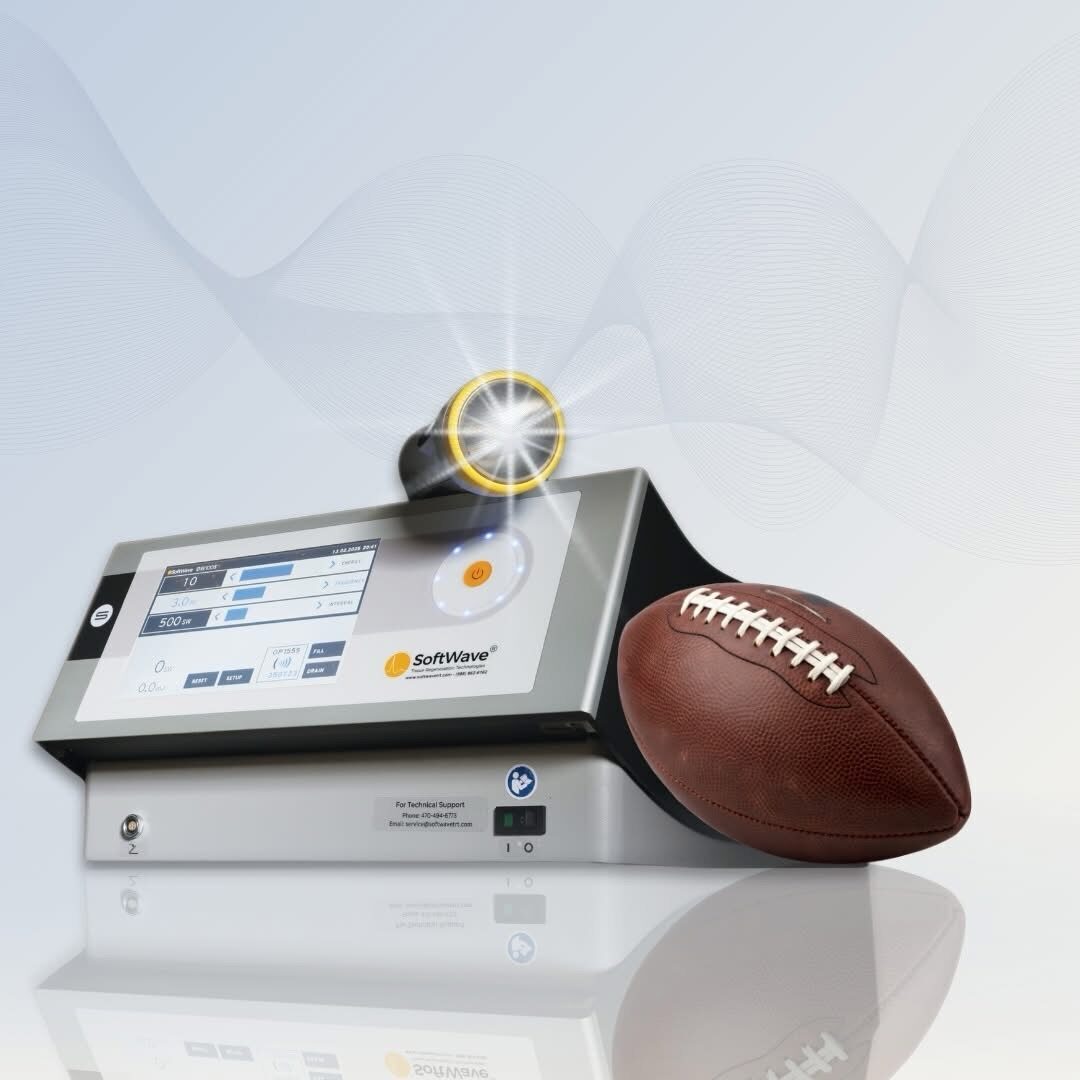
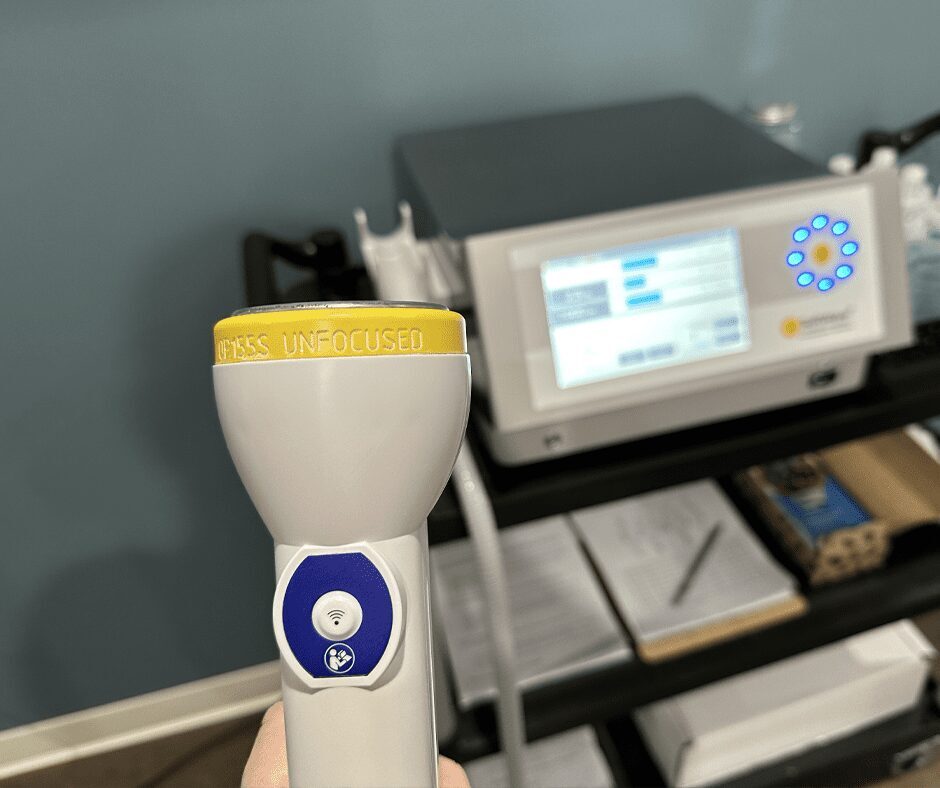
SoftWave TRT takes a different approach because it is a different kind of technology. It uses electrohydraulic, spark-generated acoustic waves delivered through a patented parabolic reflector. This makes it a broad-focused, or unfocused, shockwave device, which is a meaningful distinction. Rather than concentrating energy at a single narrow point the way focused devices do, SoftWave spreads its energy across a wide and deep treatment area in one pass, setting it apart from radial, electromagnetic, and piezoelectric focused shockwave devices on the market.
The goal is to help stimulate the body's own healing cascade at the tissue level, in the area where the pain has settled in. In plain language, here is what that process is designed to support:
- Resident stem cell activation and migration: encouraging the body's own repair cells to move toward the affected tissue.
- Angiogenesis: the formation of new blood vessels, supported by VEGF and eNOS, which helps bring fresh circulation to tissue that may be underperfused.
- Cell proliferation and collagen support: through PCNA and BMP activity, which relate to how tissue rebuilds itself.
- Inflammation modulation: helping shift a stuck inflammatory pattern rather than simply numbing it.
- Toll-like receptor regulation and clearance of senescent cells: supporting the body's ability to clear out old, non-functional cells that can stand in the way of repair.
None of this is a promise of a cure, and no responsible provider will tell you otherwise. What SoftWave is designed to do is give the body a fresh signal to resume its own healing work in tissue that may have stopped progressing on its own. For someone stuck in the same pain pattern for a long time, that kind of biological nudge is worth understanding, even if the final result depends on your individual tissue and history.
What a Session Actually Looks Like
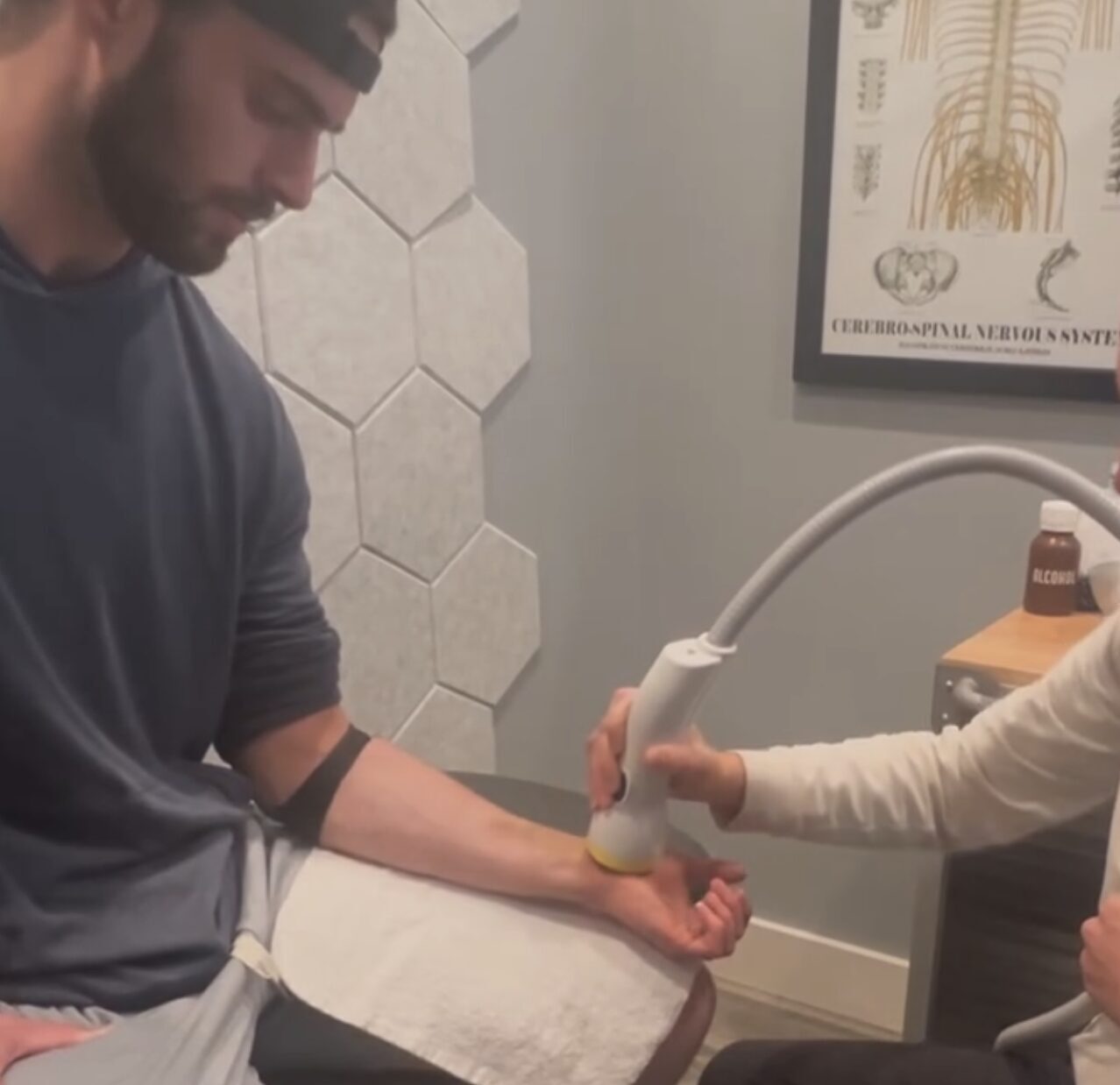
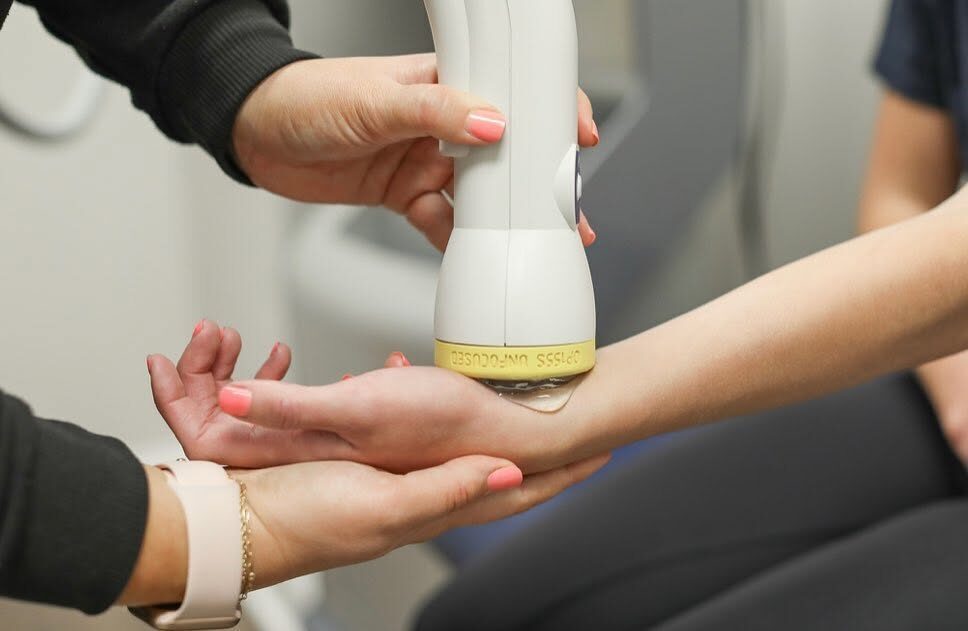
One reason SoftWave appeals to people wary of another long, uncertain treatment plan is the simplicity of the experience itself. There are no needles, no drugs, and no surgery, and there is no downtime afterward. A typical session runs roughly 10 to 15 minutes, and most treatment plans involve a series over about 6 to 8 weeks. Many patients report that the body keeps responding for weeks or months after the final session, since these tissue-level processes take time to unfold.
If a long-standing issue has left you searching for answers, the next step does not have to be another guessing game. Request a Discovery Day visit at Cedar Park Chiropractic and get a professional opinion on whether SoftWave TRT fits your situation.
How SoftWave Compares to Other Acoustic Wave Options
If you have researched shockwave-style therapies before, you may have come across other devices, including radial or focused systems. It is worth knowing that SoftWave carries four FDA clearances, covering activation of connective tissue, temporary increase in blood flow, temporary relief of minor muscle and joint pain, and treatment of chronic diabetic foot ulcers and acute second-degree burns. Many focused acoustic competitors are FDA-registered only, without that level of clearance. SoftWave is also backed by roughly two decades of clinical use, a body of more than 240 peer-reviewed studies, and over 40 patents, and is studied at leading academic institutions and used by clinicians who work with professional and collegiate athletes.
Is SoftWave Right for a Long-Standing Issue Like Yours?
The honest answer is that it depends, and the only way to know is through a real evaluation of your history, tissue, and pain pattern. That is exactly what Discovery Day at Cedar Park Chiropractic is built for. Dr. Jeff Swanson and the team will walk through what you have already tried, examine the area involved, and give you a straightforward, professional opinion on whether SoftWave TRT is a reasonable next step. This is not a sales pitch dressed up as an exam. It is a chance to get real answers before committing to anything.
If you have spent years managing a problem instead of resolving it, it may be time to have that conversation. You do not have to decide on treatment today. You just have to take the first step and get an informed, professional look at the tissue that has been giving you trouble.
What to Keep in Mind Before You Start
SoftWave is not covered by insurance, but HSA and FSA funds can be used toward treatment. Cedar Park Chiropractic also offers a New Patient Special for $79, which includes a comprehensive consultation, an introductory SoftWave session, and a customized care plan. This gives you a low-pressure way to experience the therapy before deciding whether a full series makes sense for you.
It is also worth being clear about expectations. SoftWave is not a guaranteed cure, and it is not a replacement for medical advice or emergency care. It is a therapy designed to support the body's natural regenerative processes, and results vary from person to person. What it does offer is a genuinely different mechanism of action than medication, injections, or rest and PT, which may be why it is worth exploring if those approaches have not given you lasting relief.
Ready to Take the Next Step?
If years of trying different treatments have left you without the relief you were hoping for, a fresh, tissue-level approach may be worth exploring, and Discovery Day is the place to start that conversation.
Request your SoftWave Therapy new patient visit online today
Contact Cedar Park Chiropractic
Cedar Park Chiropractic
345 Cypress Creek Rd, Suite 103
Cedar Park, TX 78613
Phone: 512-335-0641
Our Main Office Website: https://cedarparkchiro.com/
‹ Back


 345 Cypress Creek Rd,