
Blog
Focused vs. Unfocused Shockwave Therapy: Why SoftWave's Broad Wave Reaches More Damaged Tissue
Focused vs. Unfocused Shockwave Therapy: Which One Actually Reaches Your Pain?
If you have been researching shockwave therapy for a nagging shoulder, knee, or back issue in Cedar Park, you have probably noticed that not all shockwave devices work the same way. Some concentrate their energy into a tight, narrow point. Others spread a broader wave across a wider area of tissue. That difference matters, especially when your pain does not come from one single pinpoint spot but from a wider region of strained, inflamed, or damaged tissue.
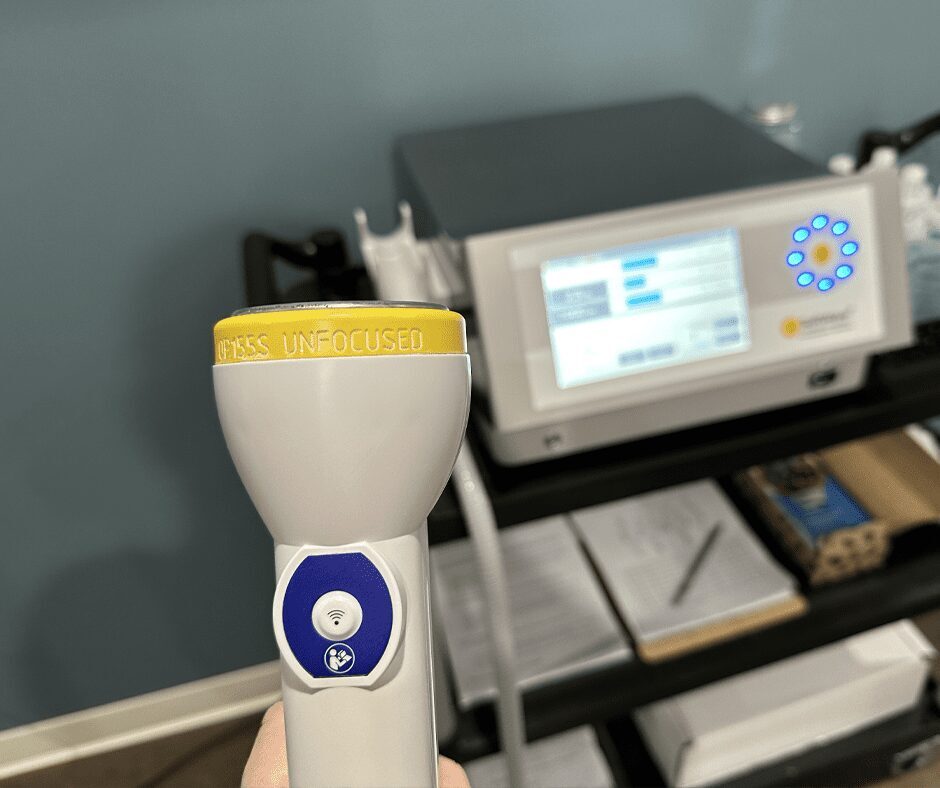
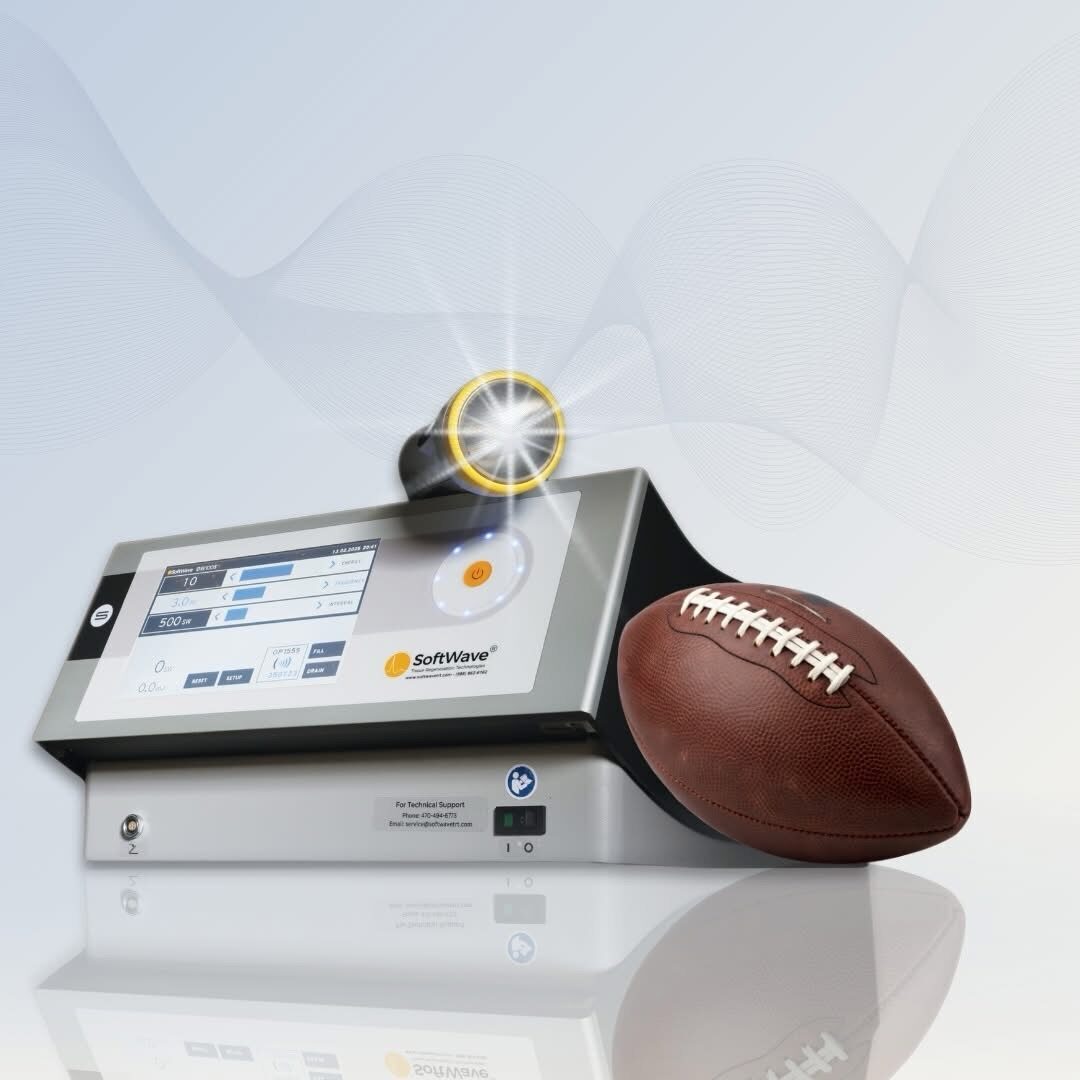
Cedar Park Chiropractic, led by Dr. Jeff Swanson, offers SoftWave Tissue Regeneration Technology (TRT) as part of a modern, non-invasive approach to pain and recovery. SoftWave uses an electrohydraulic, spark-generated wave that is broad-focused rather than narrowly focused, delivered through a patented parabolic reflector. Understanding how that technology compares to focused and radial shockwave devices can help you make sense of what you are being offered and why the delivery method matters as much as the treatment itself.
What "Focused" and "Unfocused" Actually Mean
Shockwave and acoustic wave devices generally fall into a few categories based on how they generate and direct energy. Radial and many electromagnetic or piezoelectric devices are engineered to focus their acoustic energy at a single, narrow point beneath the applicator. That concentrated point can be useful for very specific, well-defined targets, but it also means the surrounding tissue receives little to no energy unless the practitioner repositions the device repeatedly.
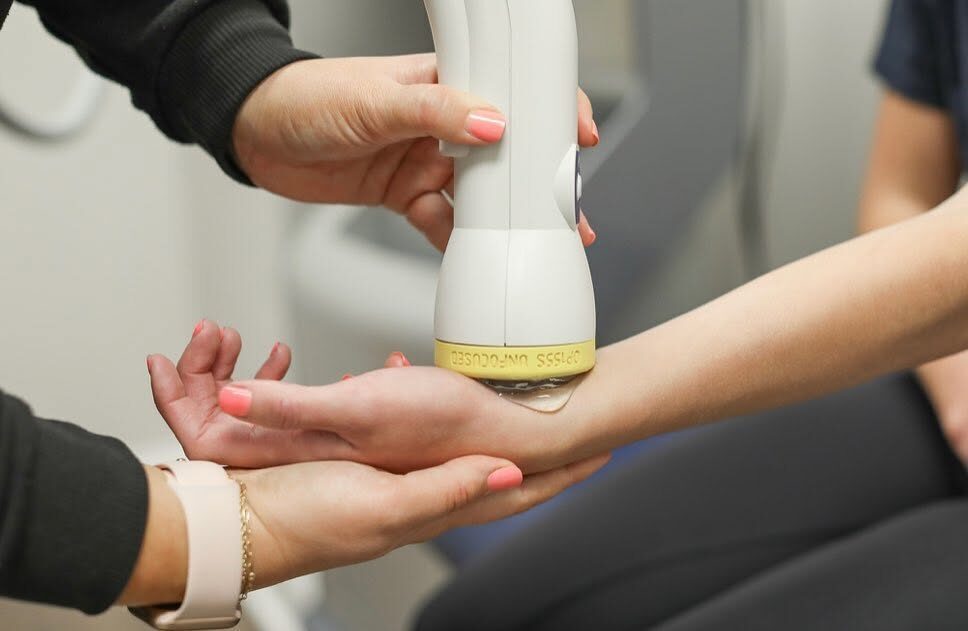
SoftWave works differently. It is an electrohydraulic, spark-generated device that produces a broad-focused, or unfocused, acoustic wave. Instead of narrowing the energy to one small point, SoftWave's patented parabolic reflector shapes and spreads the wave so it penetrates a wider and deeper area of tissue in a single pass. This broad-focused design is part of what sets SoftWave apart from radial, electromagnetic, and piezoelectric focused devices on the market today.
Why Wide and Deep Coverage Matters for Real-World Pain
Pain rarely lives in one perfect, isolated point. A shoulder problem often involves the rotator cuff, surrounding tendons, and nearby soft tissue all at once. A low back issue may involve muscles, ligaments, and fascia across a broader region rather than a single spot you could mark with a pen. When the exact source of discomfort is diffuse or hard to pinpoint, a device that concentrates energy into one narrow location may simply miss part of the picture.
Because SoftWave's wave is broad-focused, it is designed to reach a wider treatment area and penetrate more deeply in the process, without requiring the practitioner to chase down one precise point. This is particularly useful for patients dealing with overlapping or radiating discomfort, where the tissue involved extends beyond a single spot. Many patients in the Cedar Park area come in describing pain that "moves around" or covers a general area rather than one exact location, and a broad-focused approach is built with exactly that kind of presentation in mind.
Comfort and Session Efficiency
Because SoftWave treats a wider area with each pulse rather than repeatedly re-targeting a single point, sessions tend to be efficient, typically running about 10 to 20 minutes. There are no needles, no drugs, and no downtime involved. Most patients are back to their normal day immediately after leaving the office. A full course of care generally spans a series of sessions over about six to eight weeks, and the healing response the treatment triggers can continue building for weeks or even months after the last visit.
How SoftWave Helps Damaged Tissue Heal
SoftWave is not simply a pain-masking tool. The broad-focused acoustic wave is designed to stimulate the body's own natural healing cascade at the cellular level. In plain language, here is what that process involves:
- Resident stem cell activation: The wave signals stem cells already present in your tissue to activate and migrate to the area that needs repair.
- Angiogenesis: New blood vessel formation is encouraged through VEGF and eNOS signaling, which helps bring fresh blood flow to damaged tissue.
- Cell proliferation and collagen support: PCNA and BMP activity is stimulated, supporting the growth of new, healthy cells and connective tissue.
- Inflammation modulation: The treatment helps regulate the inflammatory response rather than simply suppressing it.
- Toll-like receptor regulation: Cellular signaling pathways involved in the healing process are influenced in a targeted way.
- Clearance of senescent cells: Older, less functional cells that can slow healing are cleared to make room for regeneration.
Because the wave reaches wide and deep rather than staying confined to a single point, this cellular healing response is triggered across a larger portion of the affected tissue in each session.
How This Compares to Focused Devices
It is worth being clear that focused and radial shockwave devices are not without merit, and comparing technology is different from disparaging it. Focused devices concentrate energy at a single narrow point, which can be appropriate for certain very localized concerns. SoftWave's broad-focused design simply takes a different approach, one built to cover more tissue per session without sacrificing depth of penetration.
SoftWave also stands apart in terms of its regulatory and research background. It carries four FDA clearances, covering activation of connective tissue, temporary increase in blood flow, temporary relief of minor muscle and joint pain, and dedicated clearances for chronic diabetic foot ulcers and acute second-degree burns. Many focused acoustic competitors, including StemWave, are FDA-registered only, without clearances of this kind. SoftWave is also backed by roughly two decades of clinical use, more than 240 peer-reviewed studies, and more than 40 patents, and it is studied at leading academic institutions and used by clinicians who work with professional and collegiate athletes.
If you have been wondering whether your pain calls for a broad-focused approach or would benefit from a conversation with a provider who can explain the differences in person, schedule a visit with Cedar Park Chiropractic today to talk through your specific situation with Dr. Swanson.
What to Expect and Who It May Help
SoftWave TRT is FDA-cleared for activation of connective tissue, temporary increase in blood flow, and temporary relief of minor muscle and joint pain, in addition to its clearances for chronic diabetic foot ulcers and acute second-degree burns. Many patients report improved comfort and function as their course of sessions progresses, though results vary and SoftWave is designed to support the body's healing process rather than guarantee a specific outcome. It is not a replacement for medical advice, and Dr. Swanson and the Cedar Park Chiropractic team will discuss whether it is an appropriate option as part of your care plan.
SoftWave is not covered by insurance, but HSA and FSA funds can typically be used toward treatment. New patients can start with a New Patient Special for $79, which includes a comprehensive consultation, an introductory SoftWave session, and a customized care plan built around your specific needs.
Ready to Take the Next Step?
If your discomfort feels spread across an area rather than confined to one spot, a broad-focused approach like SoftWave may be worth exploring with the Cedar Park Chiropractic team. Reach out today to find out if it fits your situation.
Request your SoftWave Therapy new patient visit online today
Contact Cedar Park Chiropractic
Cedar Park Chiropractic
345 Cypress Creek Rd, Suite 103
Cedar Park, TX 78613
Phone: 512-335-0641
Our Main Office Website: https://cedarparkchiro.com/
‹ Back



 345 Cypress Creek Rd,