
Blog
SoftWave Therapy vs. Cortisone and Steroid Injections: Masking Pain vs. Healing It
SoftWave Therapy vs. Cortisone and Steroid Injections: A Side-by-Side Comparison for Cedar Park Patients
If a stubborn shoulder, knee, or back issue has you weighing your options, there is a good chance a physician has already mentioned a cortisone or steroid injection. These shots are common, and for many people they bring welcome, fast relief. But more patients in Cedar Park are asking a deeper question: does the injection actually repair the problem, or does it simply quiet the pain for a while? At Cedar Park Chiropractic, Dr. Jeff Swanson and the team offer SoftWave Tissue Regeneration Technology as an alternative worth understanding, a noninvasive therapy built to work with your body's own healing systems rather than simply suppressing symptoms.
This article is not meant to tell you what to do about a treatment your physician has recommended. Steroid injections have a legitimate place in medicine, and only your provider knows your full history, diagnosis, and imaging. Our goal is to lay out, honestly and specifically, how the two approaches actually work so you can have a more informed conversation with your care team about what fits your goals.
The Core Difference: Calming Symptoms vs. Supporting Repair
Corticosteroid injections deliver a concentrated dose of anti-inflammatory medication directly into or around a joint, tendon, or irritated tissue. The goal is straightforward: reduce local inflammation, which in turn reduces pain. For many patients, this brings genuine short-term relief, which can be a real help for getting through a flare-up or a stretch of physical therapy that would otherwise be too painful to tolerate. The tradeoff is that steroids primarily address the symptom of inflammation, not the underlying tissue damage that produced it.
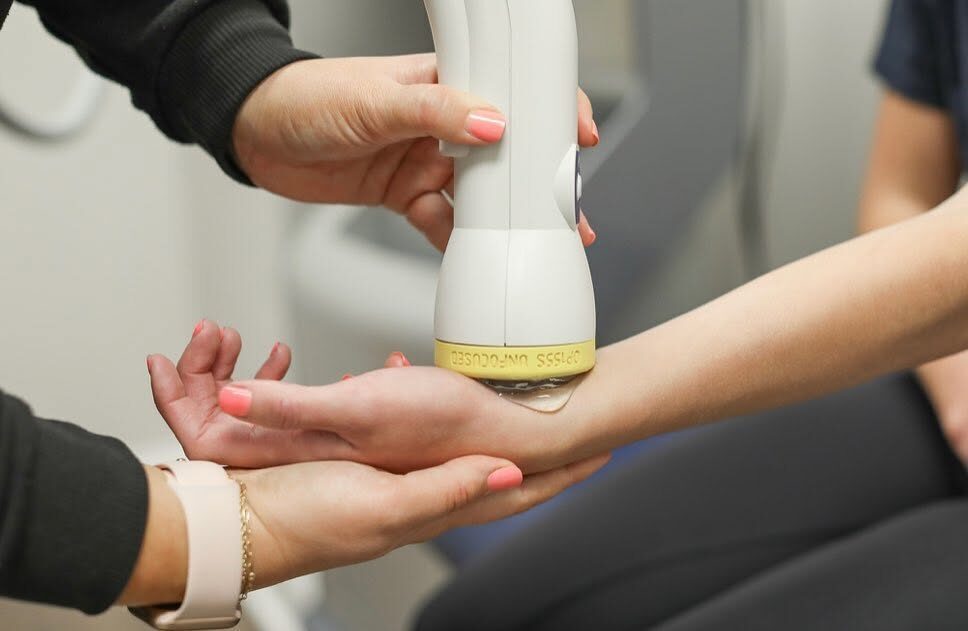
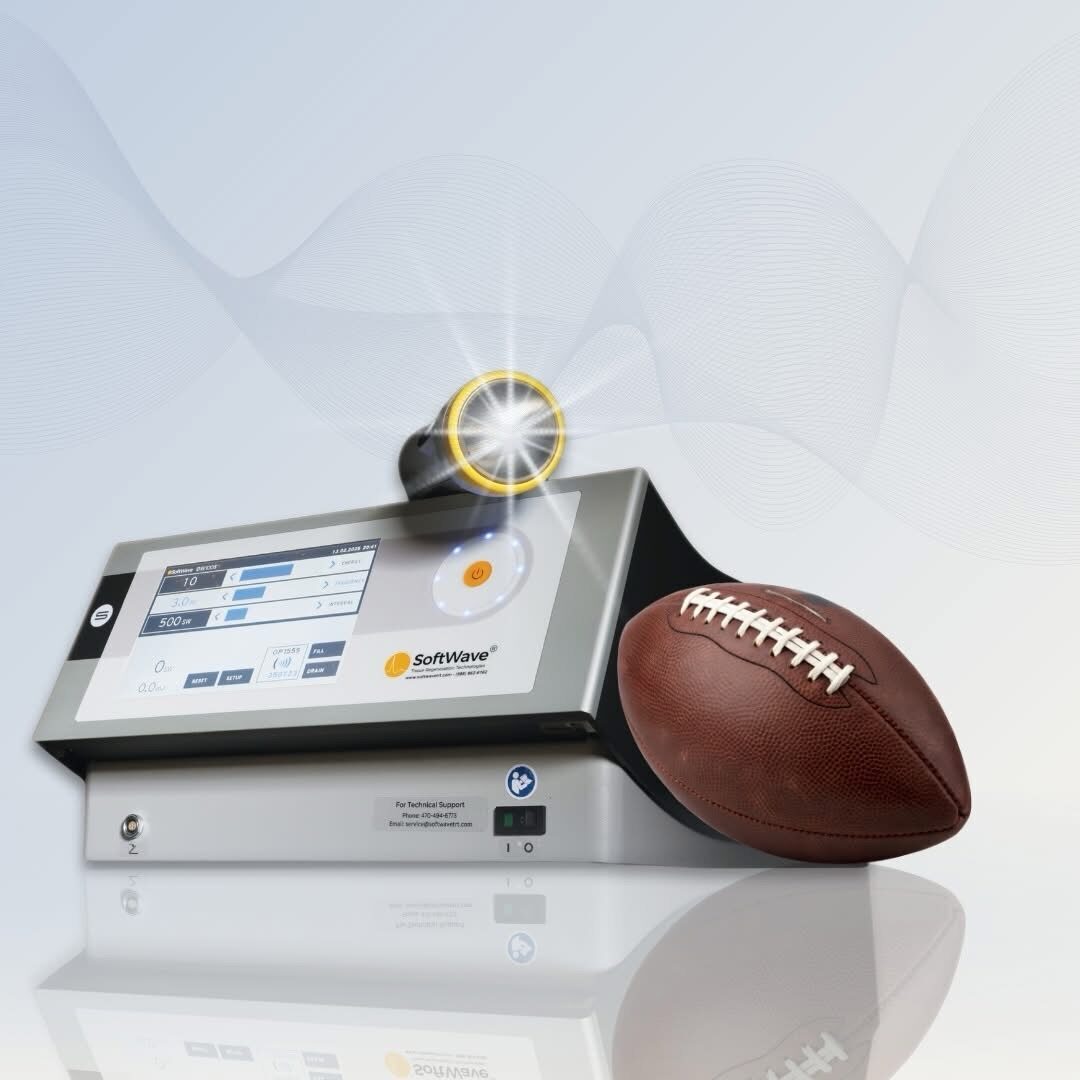
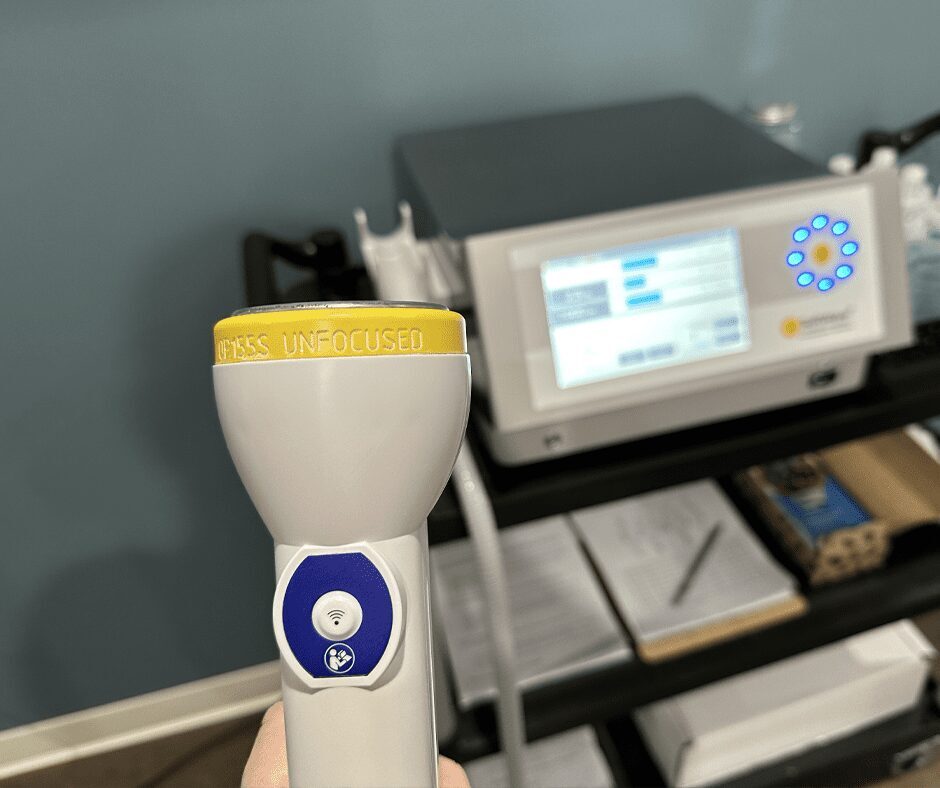
SoftWave TRT starts from a different question. Instead of asking how to quiet the pain, it asks how to help the body repair the tissue causing it. SoftWave uses electrohydraulic, spark-generated acoustic waves delivered through a patented parabolic reflector, producing a broad, unfocused wave pattern that penetrates wide and deep into the treatment area in a single pass. There are no needles, no drugs, and no surgery involved. A typical session at our Cedar Park office takes roughly 10 to 15 minutes, and most treatment plans involve a series of sessions spread across about 6 to 8 weeks.
SoftWave Therapy vs. Steroid Injections, Point by Point
Here is how the two approaches compare on the factors that actually affect your care and your daily life. For each aspect, SoftWave is listed first, then steroid injections.
How It Works
- SoftWave TRT: Uses electrohydraulic, spark-generated acoustic waves delivered through a patented parabolic reflector to stimulate the body's own cellular repair processes.
- Steroid Injections: A concentrated dose of corticosteroid medication is injected directly into or around the joint, tendon, or irritated tissue to chemically suppress inflammation.
Why it matters: One approach is designed to trigger the body's natural healing cascade, while the other works by chemically reducing inflammation without directly addressing the tissue itself.
What It Targets
- SoftWave TRT: Aims at the underlying tissue, working to activate resident stem cells, encourage new blood vessel formation, and rebuild collagen structure at the source of the problem.
- Steroid Injections: Targets the inflammatory response itself, reducing swelling and irritation in the affected area rather than the tissue damage that caused it.
Why it matters: Knowing whether a treatment is aimed at the cause or the symptom helps you and your provider set realistic expectations for how long any relief is likely to last.
Downtime and Side Effects
- SoftWave TRT: Noninvasive, with no needles, no medication, and typically no meaningful downtime, so most patients resume normal activity right after a session.
- Steroid Injections: Involves a needle and medication that can carry side effects such as a temporary pain flare, skin or soft tissue changes at the site, and, in rare cases, infection.
Why it matters: For patients who want to avoid needles, minimize downtime, or reduce their exposure to injected medication, this is often one of the deciding factors.
How Often It Can Be Repeated
- SoftWave TRT: Typically delivered as a series of sessions over about 6 to 8 weeks, and many providers are comfortable recommending additional series later since it does not rely on medication buildup in the tissue.
- Steroid Injections: Many providers limit how often the same joint can be injected, often to just a few times per year, because of concerns about tendon weakening and cartilage changes with repeated use.
Why it matters: If your situation calls for ongoing management over months or years, the frequency limits on one option versus the flexibility of the other are worth discussing with your provider.
Short-Term Relief vs Long-Term Healing
- SoftWave TRT: Designed to support the body's own repair process, so many patients continue to notice improvement for weeks or months after their final session as tissue keeps rebuilding.
- Steroid Injections: Often provides fast, noticeable relief within days, but that relief is frequently temporary, commonly lasting weeks to a few months before pain returns.
Why it matters: If your priority is quick relief for a short-term flare, steroids may serve that purpose well, but if your goal is lasting change in the tissue itself, that calls for a different kind of plan and a different kind of patience.
If you would like to understand how these differences might apply to your specific pain, condition, or recovery goals, our Cedar Park team is ready to walk you through your options in person. Schedule a consultation with Cedar Park Chiropractic today and get straightforward, honest guidance about what SoftWave can and cannot do for you.
Evidence, Comfort, and What Sets SoftWave Apart
Because SoftWave uses a broad, unfocused wave, sessions tend to be efficient and well tolerated, without needles or numbing agents. SoftWave currently holds four FDA clearances, covering activation of connective tissue, temporary increase in local blood flow, temporary relief of minor muscle and joint pain, and specific clearances for chronic diabetic foot ulcers and acute second-degree burns. It is also backed by roughly two decades of clinical use, a body of peer-reviewed research exceeding 240 studies, and more than 40 patents, and it has been studied at leading academic institutions and used by clinicians who work with professional and collegiate athletes.
SoftWave is generally not covered by insurance, though HSA and FSA funds can typically be applied toward treatment. Dr. Swanson's office offers a New Patient Special at $79, which includes a comprehensive consultation, an introductory SoftWave session, and a customized care plan, so you can experience the therapy firsthand before committing to a full series.
The Bottom Line for Cedar Park Patients
Steroid injections remain a legitimate, well established tool in medicine, and for the right patient at the right time they can provide real, meaningful relief. But when the two approaches are lined up point by point, the tradeoffs become clear. Steroids work quickly and target inflammation directly, while carrying real limits on how often they can be safely repeated and offering relief that often fades within weeks to months. SoftWave TRT takes longer to unfold and requires a series of sessions, but it is noninvasive, drug free, backed by strong FDA clearances and a large body of published research, and designed to support the tissue itself rather than only the symptom.
If you are currently managing pain with cortisone injections, please do not stop or change that treatment on your own. Your prescribing physician understands your specific diagnosis, imaging, and medical history in a way that matters for making that call safely. What we would encourage instead is an open conversation, with both your physician and our team, about how a noninvasive option like SoftWave might fit alongside your current care plan, particularly if you are hoping to reduce your reliance on repeated injections over time. Ultimately, the choice between steroid injections and SoftWave, or a combination of both under medical guidance, comes down to your goals, your diagnosis, and what your physician recommends for your specific situation. That is exactly the kind of informed decision Dr. Jeff Swanson and the team at Cedar Park Chiropractic want every patient to be able to make.
Ready to Take the Next Step?
If masking pain has started to feel like a temporary fix rather than a real solution, it may be time to explore an approach designed to support your body's own healing process. Dr. Swanson and the Cedar Park Chiropractic team are ready to talk through your options with you.
Request your SoftWave Therapy new patient visit online today
Contact Cedar Park Chiropractic
Cedar Park Chiropractic
345 Cypress Creek Rd, Suite 103
Cedar Park, TX 78613
Phone: 512-335-0641
Our Main Office Website: https://cedarparkchiro.com/
‹ Back


 345 Cypress Creek Rd,