
Blog
SoftWave Therapy vs. Surgery: How Regenerative Care May Help You Avoid or Delay an Operation
SoftWave Therapy vs. Surgery: A Side by Side Comparison for Cedar Park Patients
When a doctor first mentions surgery for a knee, shoulder, hip, or chronic tendon problem, most patients feel two things at once: relief that there is finally a plan, and worry about everything that comes with an operation. At Cedar Park Chiropractic, Dr. Jeff Swanson meets patients at exactly that crossroads. Many are not against surgery, they simply want to understand what a non-invasive option looks like before they commit to one. SoftWave Tissue Regeneration Technology, known as SoftWave TRT, is often part of that conversation.
This article lines up SoftWave and surgery feature by feature so you can see the real tradeoffs rather than marketing talk. It is not a claim that SoftWave replaces surgery in every case, because it does not, and no responsible provider would say otherwise. Some structural injuries genuinely require an operation. What this comparison offers is a clear, honest look at how the two approaches differ, so you can have a more informed conversation with your treating physician and with our team.
SoftWave Therapy vs. Surgery, Point by Point
Below, each aspect of care is compared directly. For every point, SoftWave Therapy is listed first, followed by surgery, so you can weigh the two side by side.
Invasiveness
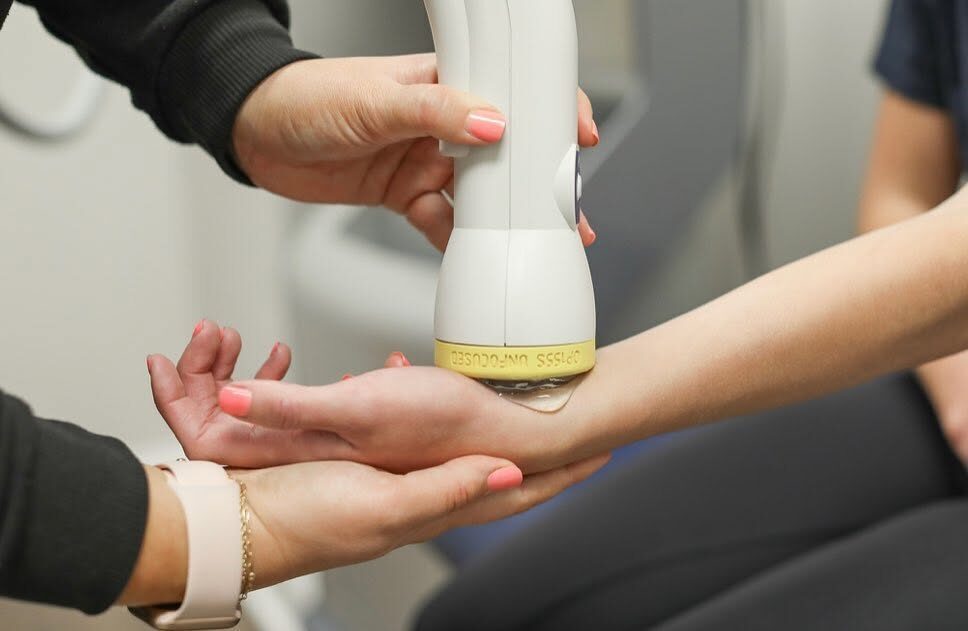
- SoftWave Therapy: A non-invasive treatment delivered through the skin using broad-focused acoustic wave energy. There are no needles, no incisions, and nothing implanted in the body.
- Surgery: An invasive procedure that requires cutting into the body, and often involves hardware, grafts, or implants to repair or replace damaged structures.
Why it matters: A non-invasive option lets patients try to address pain without the trauma to surrounding tissue that any surgical incision naturally causes.
Recovery and Downtime
- SoftWave Therapy: Sessions run about 10 to 15 minutes, delivered in a series over roughly 6 to 8 weeks, with patients returning to normal activity the same day.
- Surgery: Recovery often takes weeks to months, frequently involving restricted weight bearing, bracing, and a structured physical therapy program before full function returns.
Why it matters: For patients balancing a job, a family, and a full schedule, the difference between a same day return to activity and months of restricted movement can shape the entire decision.
Risks and Anesthesia
- SoftWave Therapy: No anesthesia, no sedation, and no drugs are involved, which keeps the risk profile minimal for most patients.
- Surgery: Typically requires general or regional anesthesia and carries recognized risks such as infection, blood clots, nerve irritation, and complications related to hardware or healing.
Why it matters: Removing anesthesia and surgical risk from the equation is often the single biggest reason patients want to explore a conservative option first.
If you are weighing these tradeoffs for your own knee, shoulder, or joint pain, the best next step is a real conversation, not more guessing. Schedule a consultation with Cedar Park Chiropractic to find out whether SoftWave Therapy is a reasonable option for your specific situation.
Effect on the Tissue
- SoftWave Therapy: Stimulates the body's own healing cascade, including activation of resident stem cells, angiogenesis, collagen production through PCNA and BMP pathways, and reduced inflammation, with benefits that can continue building for weeks after the last session.
- Surgery: Mechanically repairs, reconstructs, or replaces damaged structures directly, correcting the physical problem in one procedure rather than relying on the body's regenerative response over time.
Why it matters: SoftWave works with the body's natural repair process over several weeks, while surgery provides an immediate structural correction. Knowing which approach fits your condition is a decision best made with your treating physician.
Cost and Insurance
- SoftWave Therapy: Not covered by insurance, but HSA and FSA funds can typically be applied, and pricing is transparent with no hospital or facility fees involved.
- Surgery: Often partially covered by insurance, but frequently comes with deductibles, copays, anesthesia fees, facility fees, and the possibility of additional costs for physical therapy and follow up visits.
Why it matters: Even when insurance covers part of a surgery, the out of pocket total can be significant and hard to predict, while SoftWave pricing tends to be straightforward from the start.
When Surgery Is Still the Right Choice
- SoftWave Therapy: Best suited for chronic, degenerative pain and soft tissue conditions where the underlying structure is still largely intact and capable of a regenerative response.
- Surgery: Necessary for conditions such as a fully torn ligament or tendon, a severely damaged joint, certain fractures, or other structural injuries that cannot heal through conservative care alone.
Why it matters: This is the most important point in the entire comparison. SoftWave Therapy is not a guaranteed substitute for surgery, and some conditions genuinely require an operation. Any decision about surgery should always be made in consultation with your orthopedic surgeon or treating physician, who understands your full medical history and imaging results.
The Bottom Line for Cedar Park Patients
Surgery and SoftWave Therapy are not competitors in the sense of one always being better than the other. They serve different situations. Surgery corrects structural damage directly and remains the right choice when a ligament is fully torn, a joint is severely damaged, or a fracture needs repair. SoftWave Therapy gives the body a non-invasive way to stimulate its own healing response, which is why many patients choose to try it first, either to potentially delay or avoid an elective procedure, or to support their recovery alongside a surgeon's plan.
Dr. Jeff Swanson's role is not to talk anyone out of surgery. It is to give Cedar Park patients an honest evaluation of whether SoftWave Therapy is a reasonable option to explore before that decision is finalized. SoftWave is FDA cleared for activation of connective tissue, temporary increase in blood flow, and temporary relief of minor muscle and joint pain, and it is backed by roughly two decades of clinical use and more than 240 peer-reviewed studies. That track record gives patients real information to weigh, not just hope.
Cedar Park Chiropractic offers a New Patient Special for $79, which includes a comprehensive consultation, an introductory SoftWave session, and a customized care plan built around your specific joint and goals. Whether you ultimately proceed with surgery or find that a non-invasive path works for you, the most valuable step is an informed conversation with people who understand both the science and your goals, in coordination with your treating physician.
Ready to Take the Next Step?
If an upcoming surgical decision has you weighing your options, comparing SoftWave Therapy against surgery point by point may be the clarity you need. A non-invasive evaluation is a low-pressure way to see where you stand before committing to an operation.
Request your SoftWave Therapy new patient visit online today
Contact Cedar Park Chiropractic
Cedar Park Chiropractic
345 Cypress Creek Rd, Suite 103
Cedar Park, TX 78613
Phone: 512-335-0641
Our Main Office Website: https://cedarparkchiro.com/
‹ Back


 345 Cypress Creek Rd,