
Blog
FDA-Cleared and Research-Backed: What SoftWave's Clearances and Studies Really Mean for You
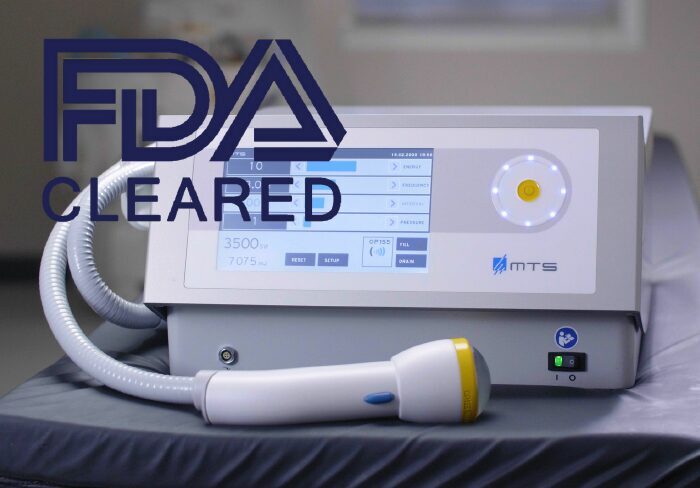
FDA-Cleared and Research-Backed: What Does That Actually Mean for You?
If you have been researching regenerative therapies for pain, injury, or slow-healing wounds, you have probably noticed a lot of marketing language that sounds impressive but says very little. Terms like "FDA-cleared," "FDA-approved," and "FDA-registered" are often used as if they mean the same thing. They do not, and the difference matters when you are deciding what to trust with your own body. At Cedar Park Chiropractic, Dr. Jeff Swanson and the team believe Cedar Park patients deserve a straight answer, not marketing shorthand. This article explains what SoftWave Tissue Regeneration Technology (TRT) is actually cleared for, how that compares to devices that are merely registered with the FDA, and why the depth of research behind SoftWave gives patients real reason for confidence.
FDA-Cleared vs. FDA-Registered: Why the Distinction Matters
These two terms get used almost interchangeably in advertising, but they describe very different levels of scrutiny.
What "FDA-Registered" Means
Registering a device with the FDA is largely an administrative step. A manufacturer lists its facility and product with the agency so the FDA knows the device exists and where it is made. Registration does not require the manufacturer to submit clinical evidence that the device is safe or effective for any specific use. In plain terms, a device can be FDA-registered without ever having been reviewed for what it claims to do.
What "FDA-Cleared" Means
Clearance is a different, more rigorous process. To receive FDA clearance, a manufacturer must submit evidence to the FDA and typically demonstrate that the device is substantially equivalent to another legally marketed device, or otherwise support that it is safe and effective for a specific, named indication. The FDA reviews that evidence before granting clearance, and the clearance applies to particular, defined uses, not to the device in general. A cleared device has been through an actual regulatory review tied to specific claims.
So when a company advertises a device as "FDA-registered" but does not mention clearance, that is worth noticing. It is not necessarily dishonest, but it is a meaningfully lower bar than clearance, and patients deserve to know which one they are being offered.
What SoftWave Is Actually Cleared For
SoftWave TRT holds FDA clearances for the following uses:
- Activation of connective tissue
- Temporary increase in local blood flow
- Temporary relief of minor muscle and joint pain
- Treatment of chronic diabetic foot ulcers
- Treatment of acute second-degree burns
It is important to be precise about what this means. Clearance for these uses tells you the FDA reviewed evidence specific to these indications and found the device supported for them. It does not mean SoftWave is cleared to treat every condition a clinician might apply it to, and it does not mean the device cures any disease or guarantees a particular outcome for any individual patient. Dr. Swanson and the team will always describe SoftWave in terms of what it is designed to do and what many patients report, not in terms of guarantees. That honesty is part of practicing responsibly, and it is also simply accurate.
How SoftWave Helps the Body Respond
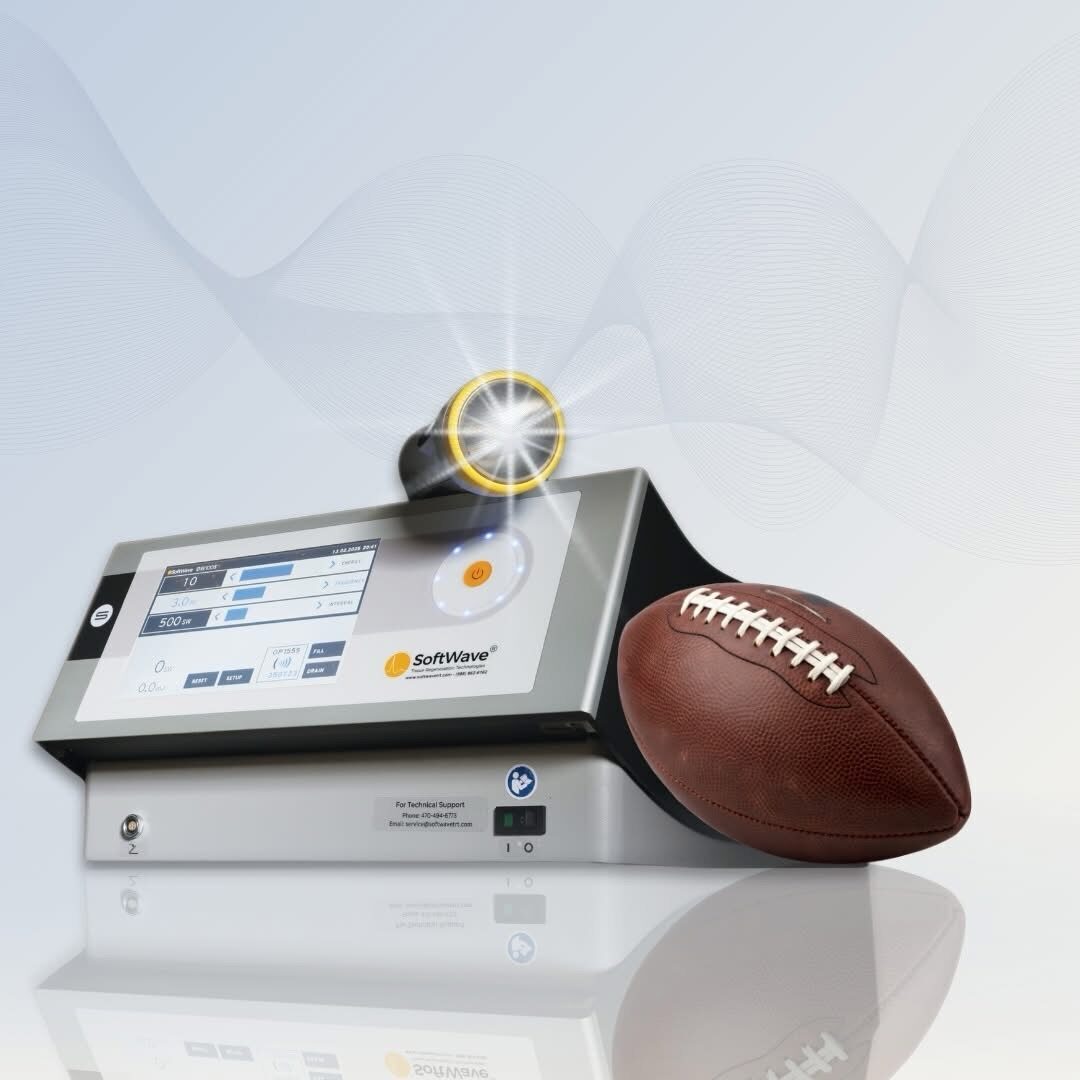
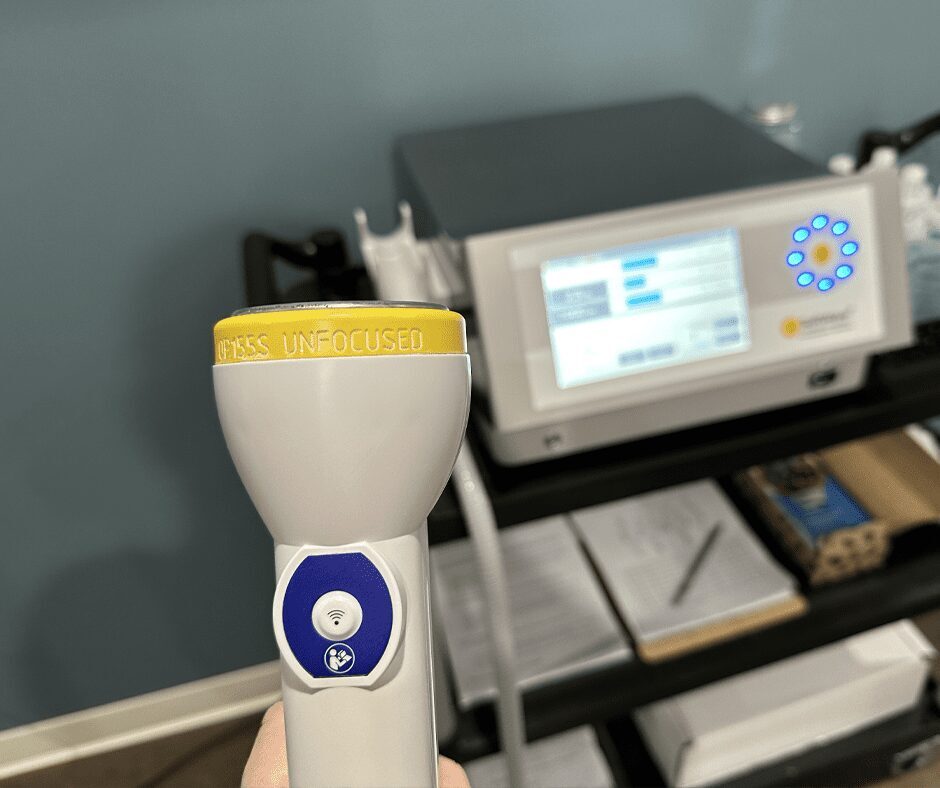
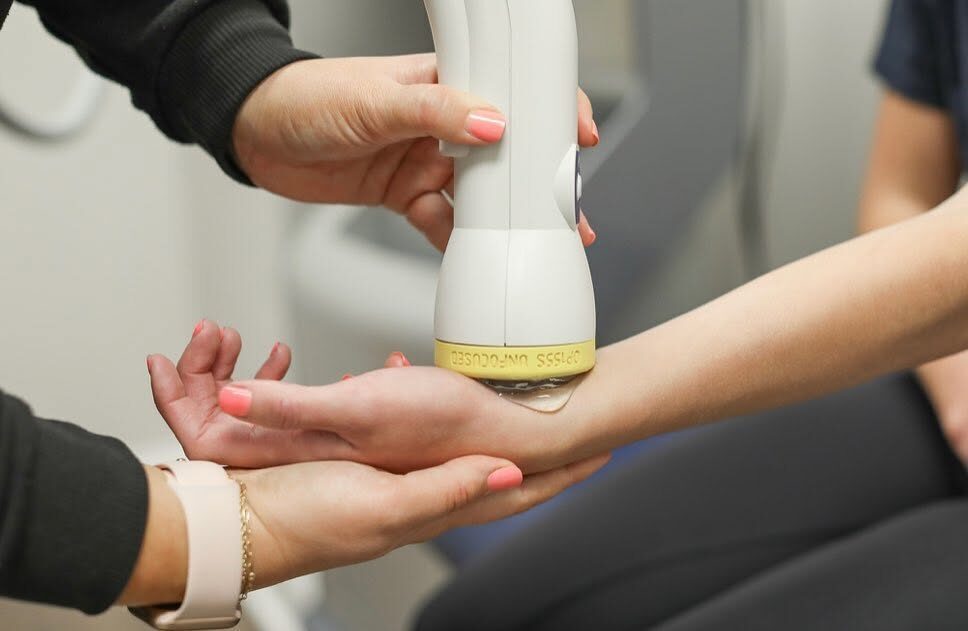
SoftWave TRT uses electrohydraulic, spark-generated acoustic waves delivered through a patented parabolic reflector. Unlike focused shockwave devices, which concentrate energy at a single narrow point, SoftWave produces a broad, unfocused wave that spreads across a wide and deep treatment area. This broad-focused design is part of what sets SoftWave apart from radial, electromagnetic, and piezoelectric focused devices on the market.
In plain language, here is what the acoustic waves are designed to trigger in the body:
- Activation and migration of the body's own resident stem cells toward the treated area
- Angiogenesis, meaning the formation of new blood vessels, supported by proteins called VEGF and eNOS
- Cell proliferation and collagen production, supported by PCNA and BMP activity
- Modulation of inflammation in the treated tissue
- Regulation of toll-like receptors, which play a role in the body's healing signals
- Clearance of senescent, or aged and no-longer-functioning, cells from the area
Because the wave covers a wide area rather than a single point, sessions are efficient, typically running about ten to twenty minutes. Most patients undergo a series of sessions over roughly six to eight weeks, and healing effects are designed to continue building for weeks to months after the final session, since SoftWave is stimulating a biological process rather than providing a temporary numbing effect.
Why the Research Depth Matters
Regulatory clearance is one form of evidence. The other is the body of research and real-world use behind a technology, and this is where SoftWave stands apart from many newer entrants in the acoustic wave space.
- SoftWave has been in clinical use for roughly two decades.
- It is supported by more than 240 peer-reviewed studies.
- The technology is protected by more than 40 patents.
- It has been studied at leading academic and research institutions.
- It is used by clinicians who work with professional and collegiate athletes, where recovery timelines and outcomes are closely tracked.
By comparison, many competing focused acoustic wave devices, including some marketed under names like StemWave, are FDA-registered but do not hold the specific FDA clearances SoftWave has secured. That is not a knock on the underlying category of acoustic wave therapy, which has genuine research support broadly. It is simply a factual distinction worth knowing before you choose where to spend your time and money. When you are evaluating a device that will be used on your own body, the combination of documented FDA clearance for specific uses and two decades of accumulating peer-reviewed research is a meaningfully different starting point than registration alone.
If you have questions about whether SoftWave TRT is a good fit for what you are dealing with, the team at Cedar Park Chiropractic can walk you through it in plain terms. You can request an appointment online and get a straightforward answer, not a sales pitch.
What This Means for You as a Patient
Understanding the difference between cleared and registered is not just a technical footnote. It shapes how you should weigh marketing claims from any device or clinic, SoftWave included. Here is what to look for when you are researching options for muscle and joint discomfort, slow-healing wounds, or general recovery support:
- Ask specifically what a device is FDA-cleared for, not just whether it is "FDA-approved" in general terms, since approval, clearance, and registration are not interchangeable.
- Ask how long the technology has been studied and how much peer-reviewed research exists behind it.
- Be cautious of language that implies a cure or a guaranteed outcome. Responsible providers describe what a therapy is designed to do and what many patients report, not certainties.
- Consider whether the provider is willing to explain the regulatory and research background clearly, rather than relying on vague reassurance.
Dr. Swanson and the Cedar Park Chiropractic team built their approach to SoftWave TRT around this kind of transparency. Patients in Cedar Park who are weighing their options deserve to know exactly what the evidence supports and what it does not, so they can make an informed decision alongside their broader care plan.
Ready to Take the Next Step?
If you want a clear, honest conversation about whether SoftWave TRT's FDA-cleared uses and research history make sense for your situation, the Cedar Park Chiropractic team is ready to talk it through with you.
Request your SoftWave Therapy new patient visit online today
Contact Cedar Park Chiropractic
Cedar Park Chiropractic
345 Cypress Creek Rd, Suite 103
Cedar Park, TX 78613
Phone: 512-335-0641
Our Main Office Website: https://cedarparkchiro.com/
‹ Back


 345 Cypress Creek Rd,